


Our sheepskin is a by-product, not a primary product. The animal wasn't raised for its pelt, so turning that pelt into something durable and valuable is value the food system would otherwise leave on the table.
That's circularity in its most literal form: nothing new taken from the earth, something useful made from what already existed.
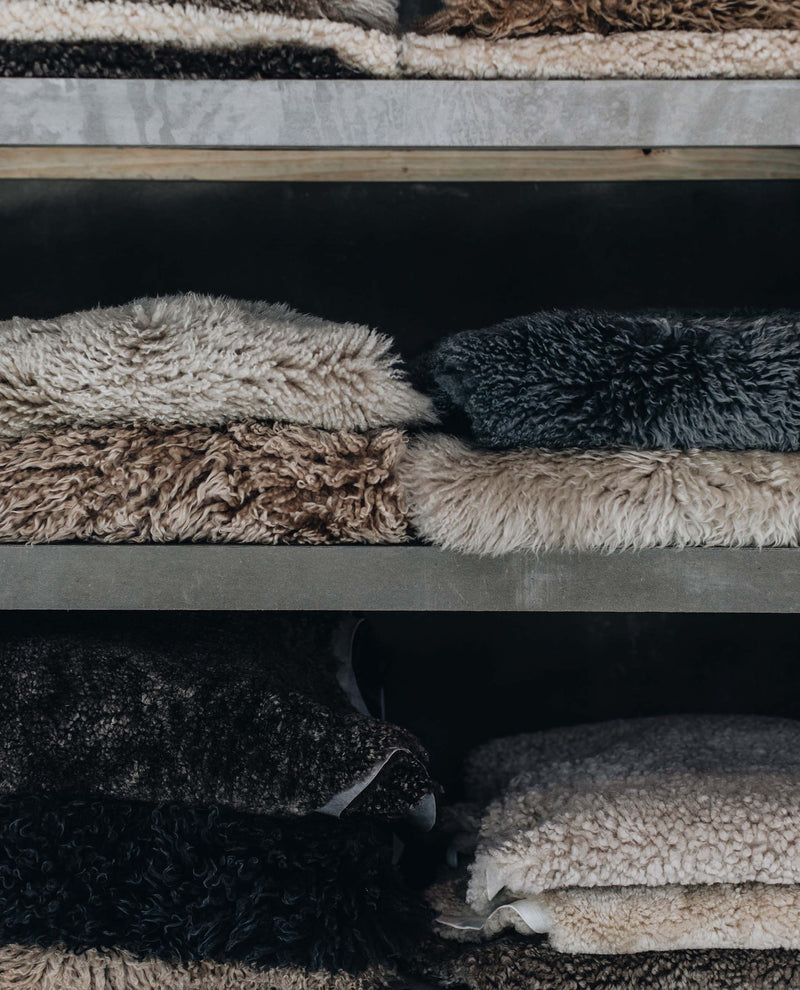
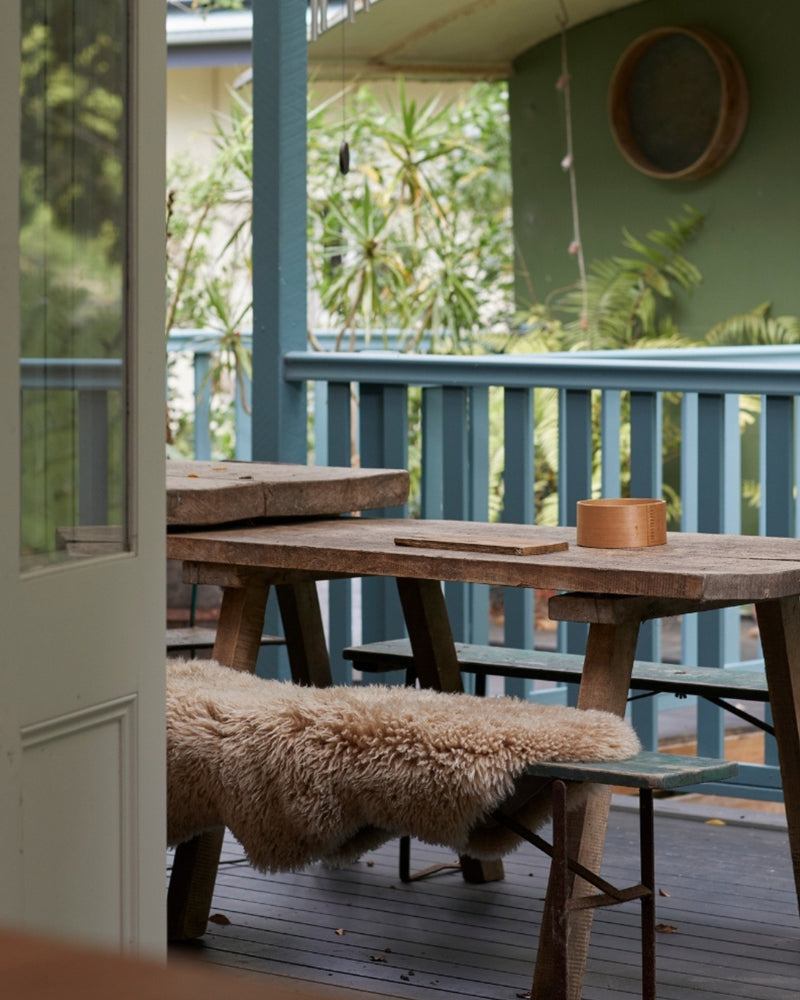
And because sheepskin, properly made, lasts for years, a rug, a shaggy bean bag, a seat cover, a throw that outlives the couch under it, the value doesn't stop when it's sold. It keeps compounding every year the product stays in use.

What circularity actually means
Circularity is a simple idea dressed up in a complicated word. Keep materials in use for as long as possible. Recover value instead of losing it. Treat what would normally be thrown away as a resource, not rubbish.
It’s less a philosophy and more a discipline: design out waste before it happens, and catch what’s left before it goes to landfill.


Inside the factory, the same logic holds
A hide only tells half the story. What happens to it on the way to becoming a finished product tells the rest.
At the factory where our skins are processed, salt used in curing is recovered and recycled rather than discarded. Seventy percent of water used in processing is reused. Heat captured from the drying units goes back into the system instead of escaping as waste.
Damaged skins and offcuts aren't binned, they're worked back into production. Bio-waste and grease are sold on for other uses rather than sent to landfill. Packaging and factory materials are recycled as a matter of course.
None of this is incidental. Each one is a small closed loop, and together they add up to a factory built around the same principle as the material moving through it: use it, don't lose it.

Improved chemistry, less impact
The move toward chrome-free processing and reduced chemical use matters here too. A circular process is only as good as its weakest link, and heavy chemical burdens have always been that link in traditional tanning.
Reducing chemical load lowers environmental impact, while this is far from perfect - it’s a step in the right direction. We know it’s on us to keep pushing for continued innovation in our factory’s tanning practices.
A word we use carefully
It's tempting to call all of this "fully circular." We won't, not yet.
What we can say, and stand behind, is that sheepskin, and the way we process it, is circularity-aligned. Every recovered litre of water, every reused offcut, every by-product that finds a second use is a step in that direction, not a finish line.


The value of a by-product, done right
Strip away the framework language and the point is simple. A material that already exists, used well. A factory that wastes less with every cycle. A product that’s built to outlast the trend it was bought in.
That’s not a marketing claim. That’s just good manufacturing - and it happens to be exactly what circularity was always meant to describe.
Find out about our current accreditation + certification here.