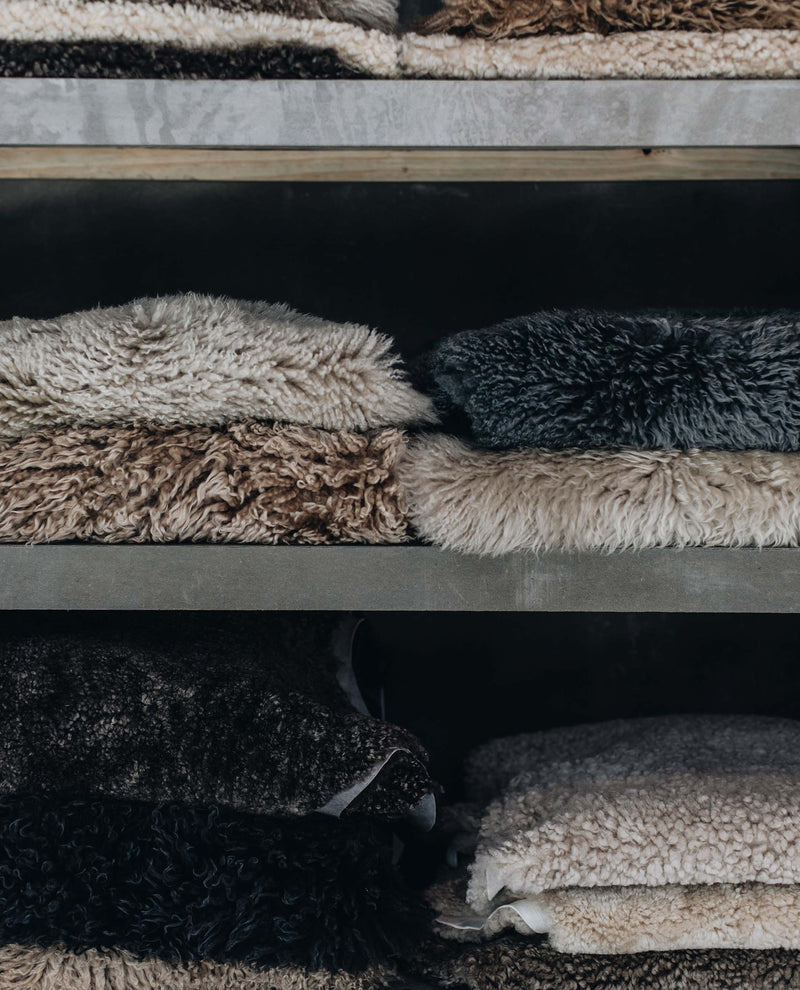
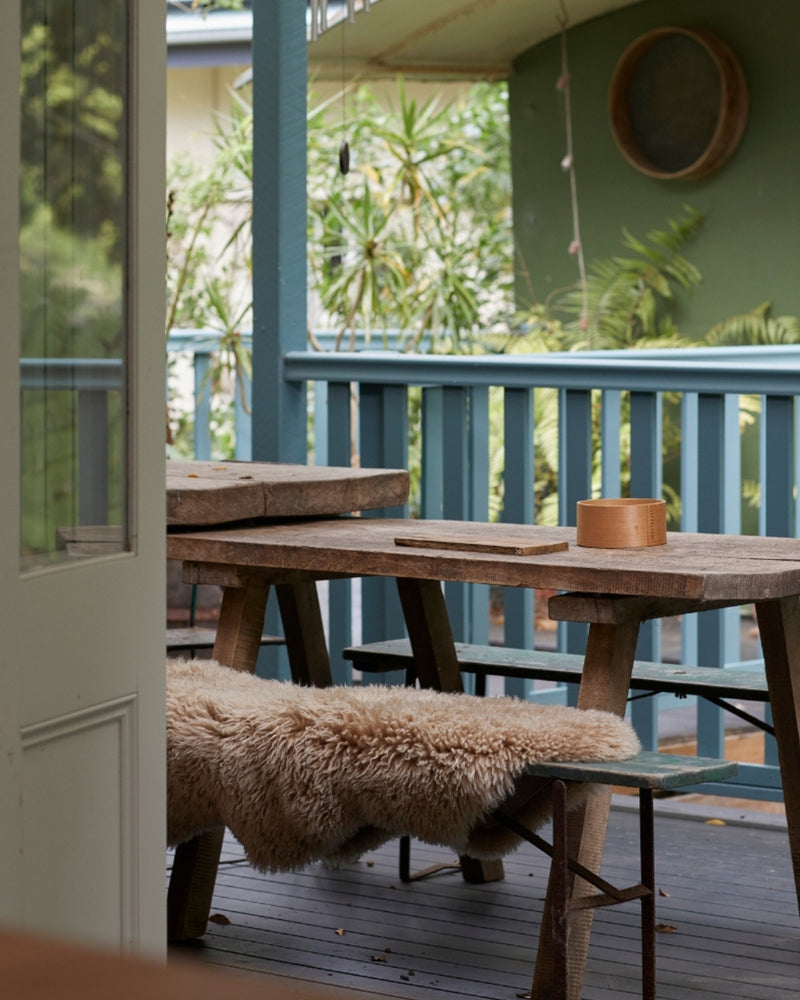
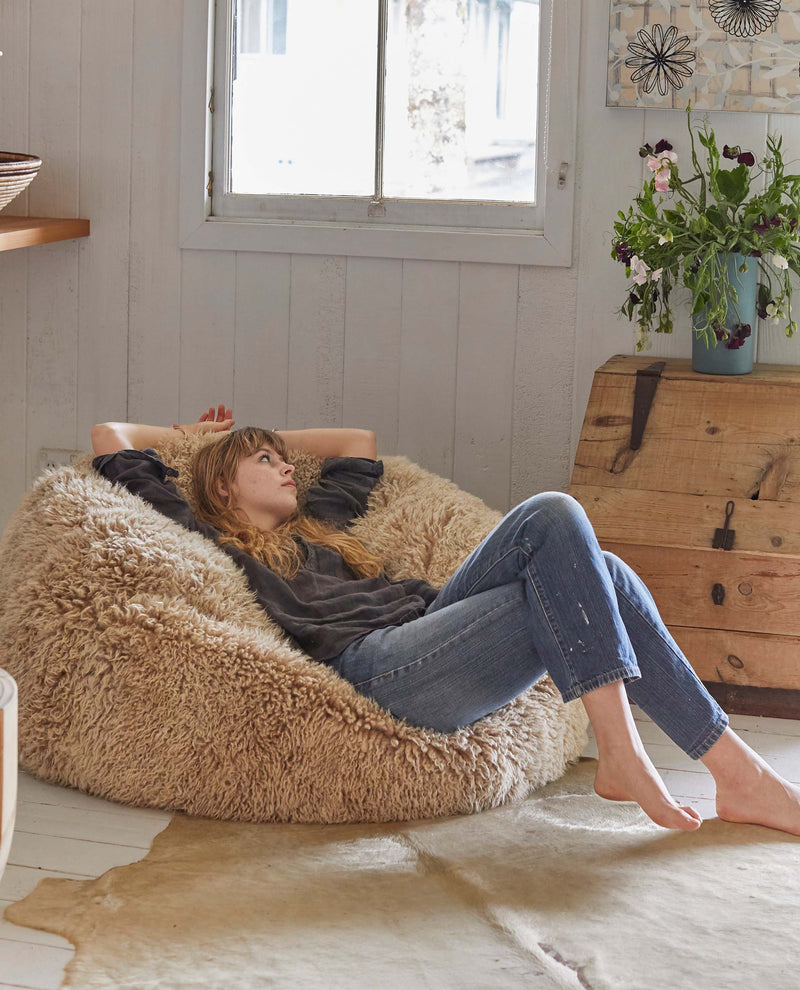
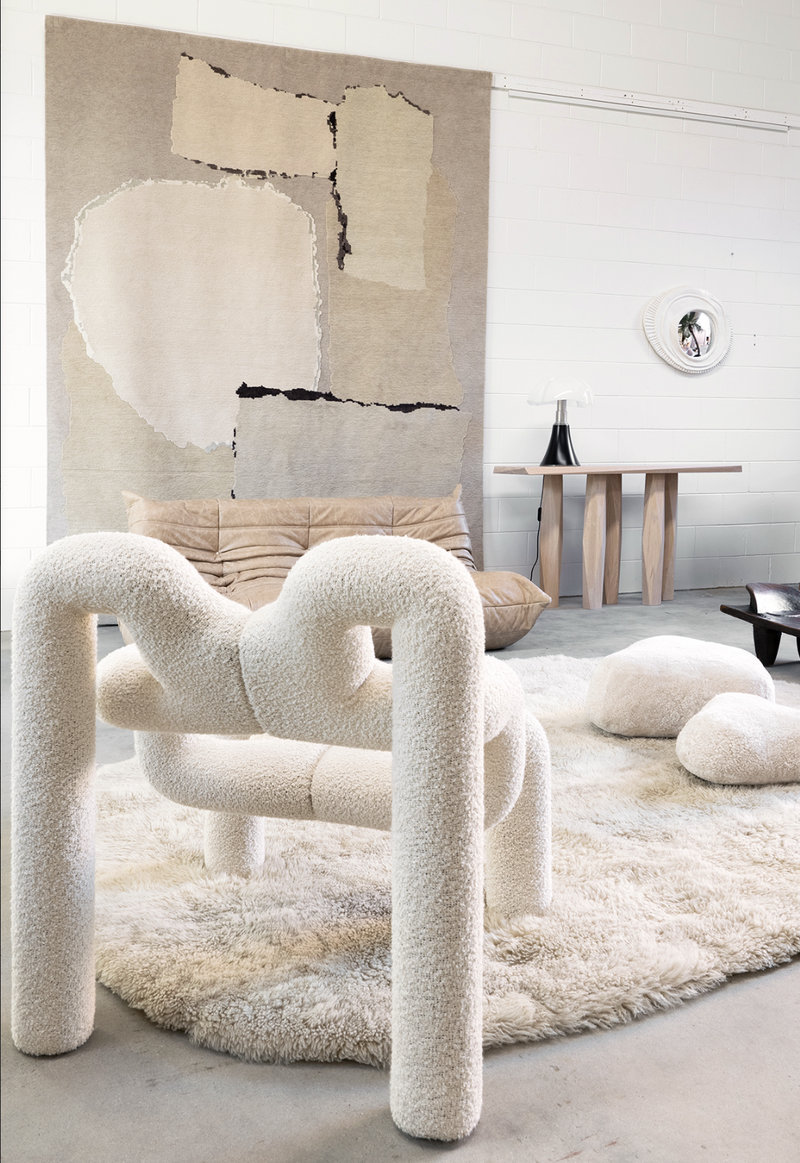
You can tell a lot about a sheepskin in the first few seconds. Pick one up, run your hand through it and notice what you feel before you start thinking about it.
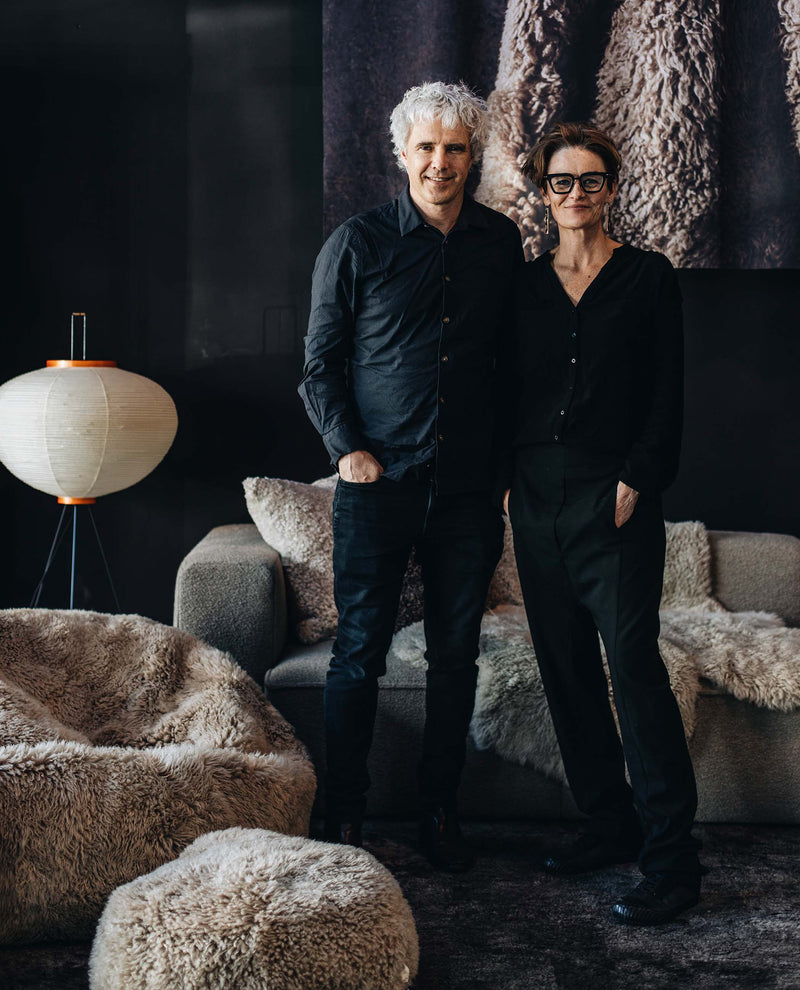
We recently sat down with Leroy Parker, an expert tanner, to talk about what separates a great sheepskin from an ordinary one. (If you’d like the full story of how our partnership began, you can read it here.) Here’s what we look for, and what you can look for too.

First step – see if it’s really sheepskin.
If you’re ever unsure, put a synthetic piece next to the real thing and run your hands through both. Synthetic feels harsh, and you’ll often notice fibres coming away as you touch it. It’s also made from fuel, so it doesn’t handle heat. Wool, on the other hand, is naturally fire-resistant, one of its many perks.
Start with what the wool feels like.
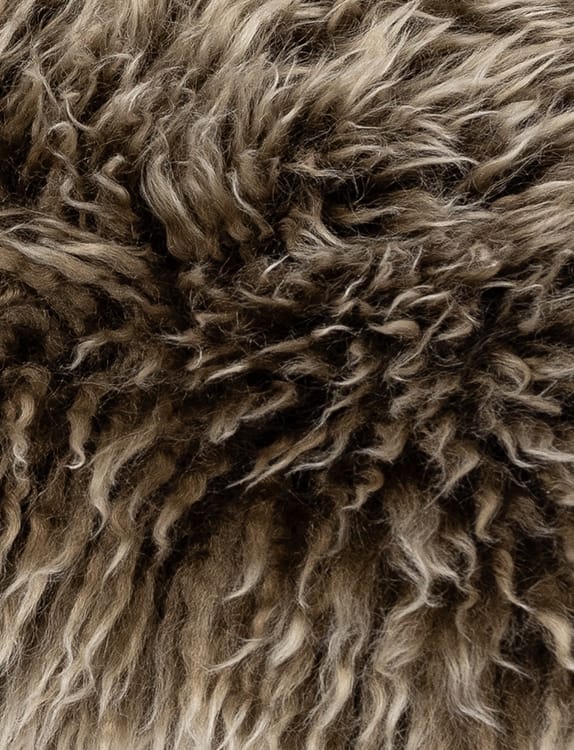
Check the fullness: run your hand through the wool and feel how much is there. A great skin should feel full, with a thick bulk that fills your palm. You shouldn’t see any skin showing through the wool.
This matters most in short wool. Our short wool skins come from New Zealand shorn lamb. They’re shorn once by the farmer, then allowed to grow until the wool reaches just the right length. Because the density is already there in the structure of the fleece, it never feels empty despite being short.
Look for the crimp.
While this isn’t always a measure of quality as such, it is a way to tell a Wilson & Dorset skin from the rest. We love the soft wave that runs through our wool, or the slightly wild curl you’ll see depending on the length. That crimp and curl give our skins their signature character.
It’s worth thinking about how the finish will look with use, too. Wool that has been ironed straight can matt together over time, so its appearance may change from when you first bought it. A skin that celebrates its natural character, rather than stripping it out, will still look good in your home years from now.


While you’re at it, check the wool’s ends.
Check the very end of the wool. A good skin has a soft, defined tip, which gives the surface its depth and movement.
Depth of colour.
Colour is one of the toughest things to get right, and it starts at the source. Most of our skins come from the South Island, where the wool tends to be best for what we’re after.
It’s also built in the dyehouse. We use metal-complex dyes, which are highly resistant to sunlight. They cost more and are harder to work with, but they’re what makes a skin last. Cheaper dyes tend to fade unevenly, leaving patches and odd shades that drift towards green. A well-dyed skin fades evenly, and when it does, it only softens.
Leather and wool, both done properly.
A sheepskin is two materials in one, and tanning the leather without affecting the wool (and the other way around) is one of the hardest parts of making a skin. It takes real expertise in both leather and textile, and many steps to get there. When any of them are rushed, you can see it in the finished skin.
Want to know more about the people behind our skins? Read about our partnership with Auskin in Excellence always feels good.